

Ivee
Smart Home Mobile Application Development
Project Overview and Goals
Industry - Smart Home Technology
Region - USA
Duration - 2018
Project Goals and Objectives
The main goal of the Ivee mobile application project was to provide users with an intuitive and convenient tool for configuring and managing the Ivee voice assistant device, enabling seamless integration with smart home environments. This solution was designed to support entry-level users as well as technology enthusiasts, removing complexity from the setup process and allowing for day-to-day device control directly from a mobile interface.Empowering Smart Home Accessibility
The application aimed to make the process of connecting Ivee to various home systems simple and accessible, minimizing barriers for both initial onboarding and everyday use. Reducing friction in device management was a critical objective, ensuring that users could quickly bring their Ivee assistant online and personalize its behavior to fit their routines.This comprehensive approach enabled the client to effectively present their innovative solutions and maintain a high level of engagement with the target audience through a convenient and modern web resource.
Enhancing User Experience
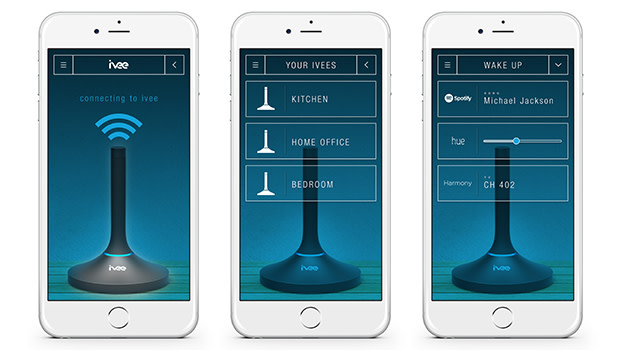
A core requirement was to deliver a clear, user-friendly interface supporting essential controls such as Wi-Fi setup, device preferences, and routine automation. The project prioritized practical usability and responsiveness, helping users manage the assistant’s functions (e.g., voice activation, integration selection, firmware updates) through well-structured navigation.Supporting Flexibility and Compatibility
Given the diverse ecosystem of smart home solutions, the application was built to facilitate flexible connections between Ivee and popular device brands and services. The mobile app served as the central hub for configuring compatible integrations and keeping the user informed about device status and available options..Alignment with Existing Ecosystem
As the backend and design were handled externally, our responsibility centered on implementing an adaptive client-side architecture. The solution was created to fit within established technical and branding constraints, translating handed-over design assets into a functional mobile experience with a focus on reliability and simplicity. In summary, the main objective of the project was to empower users to take full advantage of their Ivee device, offering a seamless bridge between hardware and the growing world of smart home connectivity.
Analysis and Planning
The development of the Ivee mobile application commenced with a thorough analysis of the smart home market landscape and user needs. Recognizing the increasing demand for accessible and reliable smart home solutions, the focus was placed on creating an app that simplifies the configuration and day-to-day control of voice-activated devices like Ivee.Understanding the User Base
Key insights identified that the target audience ranged from tech-savvy enthusiasts to everyday consumers seeking straightforward control over their connected home environments. This diversity necessitated a design that balanced functionality with ease of use, supporting users with varying levels of technical expertise.Market Research and Competitor Analysis
The planning phase involved studying competing smart home management applications to identify common pain points such as complex onboarding procedures, fragmented device control, and lack of clear guidance. Lessons from these analyses directly influenced the app’s structure and feature prioritization, aiming to deliver a more cohesive and user-friendly experience.Defining Core Features and Functionality
Based on the research, the application was scoped to include essential functions such as Wi-Fi setup, device linking, routine creation, and status monitoring. Flexibility in integration with various smart home devices and adaptability to evolving user needs were prioritized to future-proof the product.Addressing Limitations and Dependenciest
Due to the project’s scope and existing architecture managed by external teams (backend and design), the analysis acknowledged constraints on system integration and UI development. This guided the decision to focus efforts on front-end architecture and modular design, ensuring smooth collaboration and efficient implementation within these boundaries.This thoughtful planning laid a solid foundation for the subsequent development phases, aligning the project closely with user expectations and technical realities.

Structure Design and User Experience
The design of the Ivee mobile application’s structure focused on creating an intuitive and logical flow that guides users seamlessly through device setup and management tasks. The goal was to minimize complexity and make critical functions easily accessible regardless of the user’s familiarity with smart home technology.Navigational Flow and Information Architecture
Key screens and workflows were mapped out to support straightforward navigation. This included clear onboarding paths for device connection, accessible controls for managing settings, and quick access to routine automation tools. Special attention was given to reducing the number of steps required to perform common actions, enhancing the overall user journey.User Interaction and Feedback
The experience was designed to provide immediate and meaningful responses to user inputs, offering confirmation of successful actions and clear notifications in case of errors or required attention. Such feedback mechanisms contribute to user confidence and reduce potential frustration, especially during initial device setup.Adaptability and Scalability
The app’s structure was envisioned with flexibility, enabling it to support expanding device ecosystems and potential feature enhancements. Responsive design principles ensured compatibility across different mobile devices and screen sizes, maintaining a consistent and satisfying user experience.Focus on Usability
Considering the diverse user base, the application emphasized simplicity and clarity in interface design elements. By focusing on usability found in familiar mobile paradigms, the app successfully catered to both novice users and those more experienced with smart home technologies.This structured and user-centric approach in the design phase was critical to delivering an effective and approachable smart home management tool.
Technical Implementation
The development of the Ivee mobile application leveraged the Cordova and Ionic frameworks, enabling efficient cross-platform deployment on both iOS and Android devices. This choice facilitated a unified codebase, streamlining maintenance and updates while delivering a native-like user experience.Frontend Architecture
Our team focused on building a modular and scalable frontend architecture that translated the provided design assets into functional and responsive interfaces. The architecture was designed to accommodate dynamic content and seamless interaction patterns critical for device management and user engagement.Integration Scope
While backend services and API development were managed by external teams, the mobile app was engineered to effectively communicate with these layers through well-defined endpoints. The app’s architecture ensured smooth data exchange for device status, configuration commands, and notification handling.Performance and Reliability
Performance optimization was prioritized to ensure fast load times, smooth transitions, and minimal lag, delivering a responsive and reliable experience even on lower-end devices. Error handling and fallback mechanisms were integrated to maintain stability during intermittent network conditions or unexpected failures.Adherence to Constraints
Given the absence of in-house backend or design control, the implementation emphasized strict adherence to pre-established technical specifications and style guides. This approach ensured compatibility with the overall Ivee ecosystem while maximizing the quality and consistency of the mobile application output.The technical approach combined modern hybrid development methodologies with disciplined engineering practices, enabling a robust and maintainable product tailored to the client’s requirements.
Technology Stack
Mobile application
Java (Cordova/Ionic)
Integrations
External API Integrations
Collaboration Tools
Pivotal, Slack, Skype, Github
Team
- Mobile developer
- QA Engineer
- Project Manager
Testing and Launch
A comprehensive testing phase was conducted to ensure the Ivee mobile application delivered a stable, secure, and user-friendly experience. Functional testing validated that all features worked as intended, including device setup, configuration changes, and real-time status updates.User Acceptance and Performance
The application underwent rigorous user acceptance testing (UAT) to confirm it met client expectations and provided smooth interactions under various scenarios. Performance tests ensured responsiveness and quick load times across supported devices, maintaining usability even in low-bandwidth conditions.Quality Assurance and Bug Fixing
Ongoing quality assurance processes identified and resolved bugs, refined error handling, and improved feedback mechanisms. These efforts were pivotal in delivering a polished and reliable product ready for market release.Deployment and Monitoring
The app was successfully deployed to both iOS and Android platforms, reaching the target audience effectively. Post-launch monitoring was established to track app stability and user feedback, enabling timely updates and enhancements as needed.By adhering to thorough testing and careful launch procedures, the project ensured a dependable and engaging solution for managing the Ivee smart home assistant.
Software Engineering Case Studies
Contact us
Please fill out the form, and we will get back to you once your request has been processed.
You can also send your request directly to our email: info@24gen.space
We will respond as soon as possible after receiving your message.