

Street parking finder on city cameras
GetGap
The free spot is there. You just cannot see it from behind the wheel.
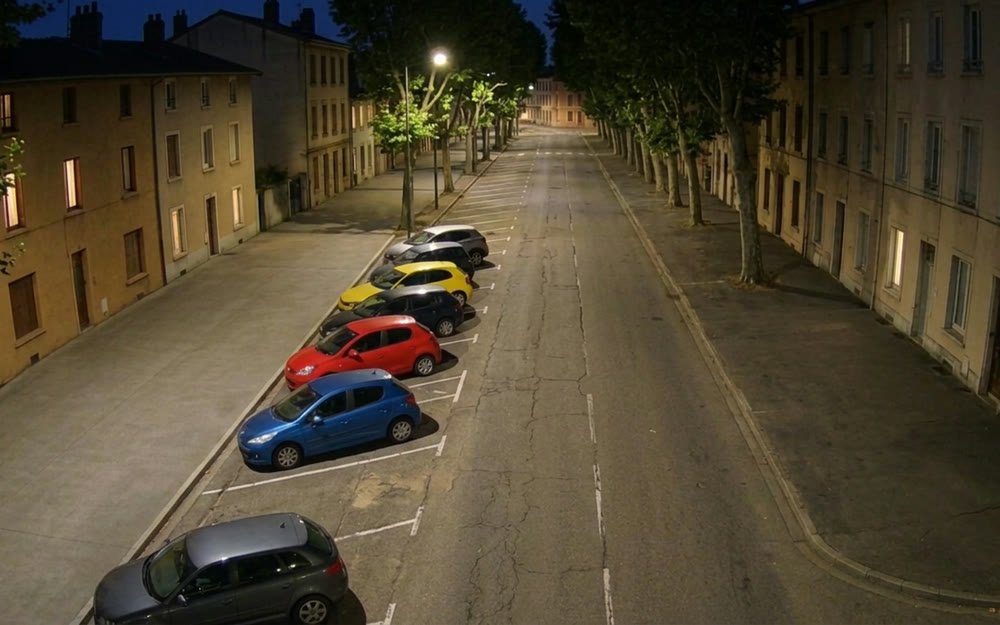
The last ten minutes of a trip are the most pointless ones. You have already arrived, but you are still circling: one block, another block, back again. And all that time a free spot was waiting on the next street.
The city saw it.
A camera was looking right at it.
The street as it is
A real street does not look like a car park from a textbook. The markings are worn off, or were never there. Someone has parked sideways. It is snowing. GetGap is made for that street.
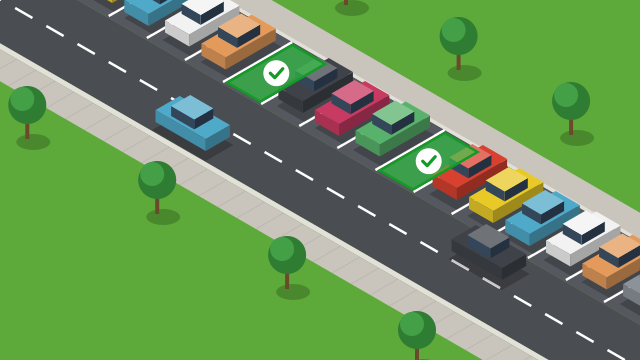 Markings existWhere the spots are painted on the road, the system watches every one of them.
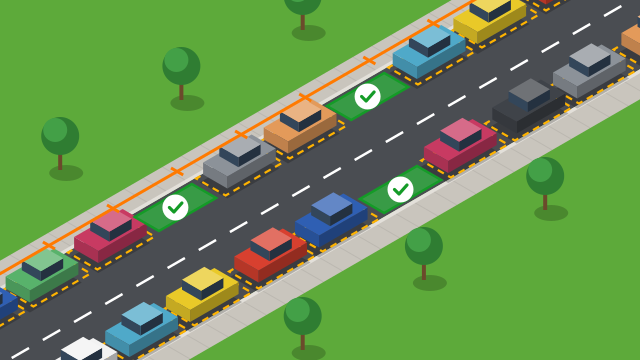 No markingsThe system looks at how the first car has parked and works out how many spots fit and how many are left.
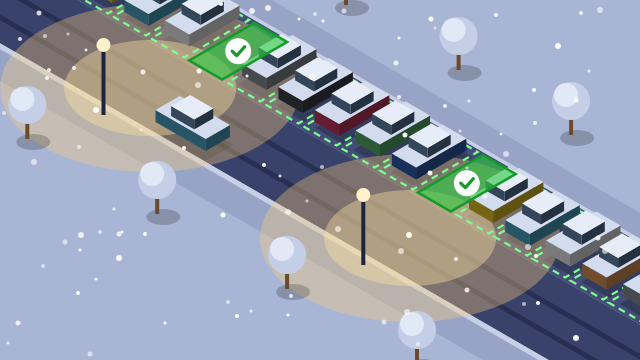 A difficult stretchThe spots are drawn once, right on the camera frame. The camera does not move, so this works at night, under snow and under a layer of leaves.
It tells a car from a fallen branch. And it honestly counts two spots for the driver who took two.
Our OpenCV prototype told a free spot from a taken one correctly in about 95 cases out of 100. We know where the other five come from and how to remove them: a higher camera, a second view of the same spot, and an exact position on the map for every camera.
The city already sees everything
There are thousands of cameras on city streets. They look at the very spots drivers are searching for, and tell nobody. We teach these cameras to answer one question, and turn what the city already has into a map of free street parking spots.
- Cameras the city already hasNo sensors in the asphalt. No barriers and no construction.
- One questionIs this spot free? Free or taken. Nothing else.
- Faces are blurredFaces of passers-by are blurred automatically.
- Number plates tooNumber plates are blurred as well, unless the city decides otherwise.
The map that was missing
Fewer circles. Less traffic. Less exhaust under the windows.
The city pays. Everybody wins.
The driver
The driver gets a spot and goes straight to it.
- The spot before you arriveYou see the free spots around your destination while you are still on the way.
- Straight to the placeNo more circling: the map leads you to a spot that is free now.
- Any ordinary streetIt works where you really park: on the street, not only in an equipped car park.
- The city paysThe service is paid for by the city, so it can be free for drivers.
The city
The city gets streets without cars circling in search of parking.
- No new equipmentThe system runs on the cameras the city already has. There is nothing to buy and nothing to build.
- Fewer cars circlingLess traffic and less exhaust on the busiest streets.
- A picture of every streetThe city gets a precise picture of how its streets are used: where the spots are always taken and where they stand empty.
- A service residents noticeDrivers see the city helping them every day, right on their phone.
We took this idea as far as a pilot agreement with a European city.
Talk to us about GetGap
We are looking for an investor, and for the city that will be first to show its drivers where the free spots are.
info@24gen.space