

FAA Ground Stop, Nvidia CEO Exit: IT News November 9-14
IT news November 2026: all US flights were grounded for five hours, Nvidia lost its CEO and Google started a core update. Fifteen stories, grouped by topic, one at a time.
Every departing flight in the US was grounded
For about five hours on Friday, no plane could take off anywhere in the country. A day later, officials still offer different explanations.
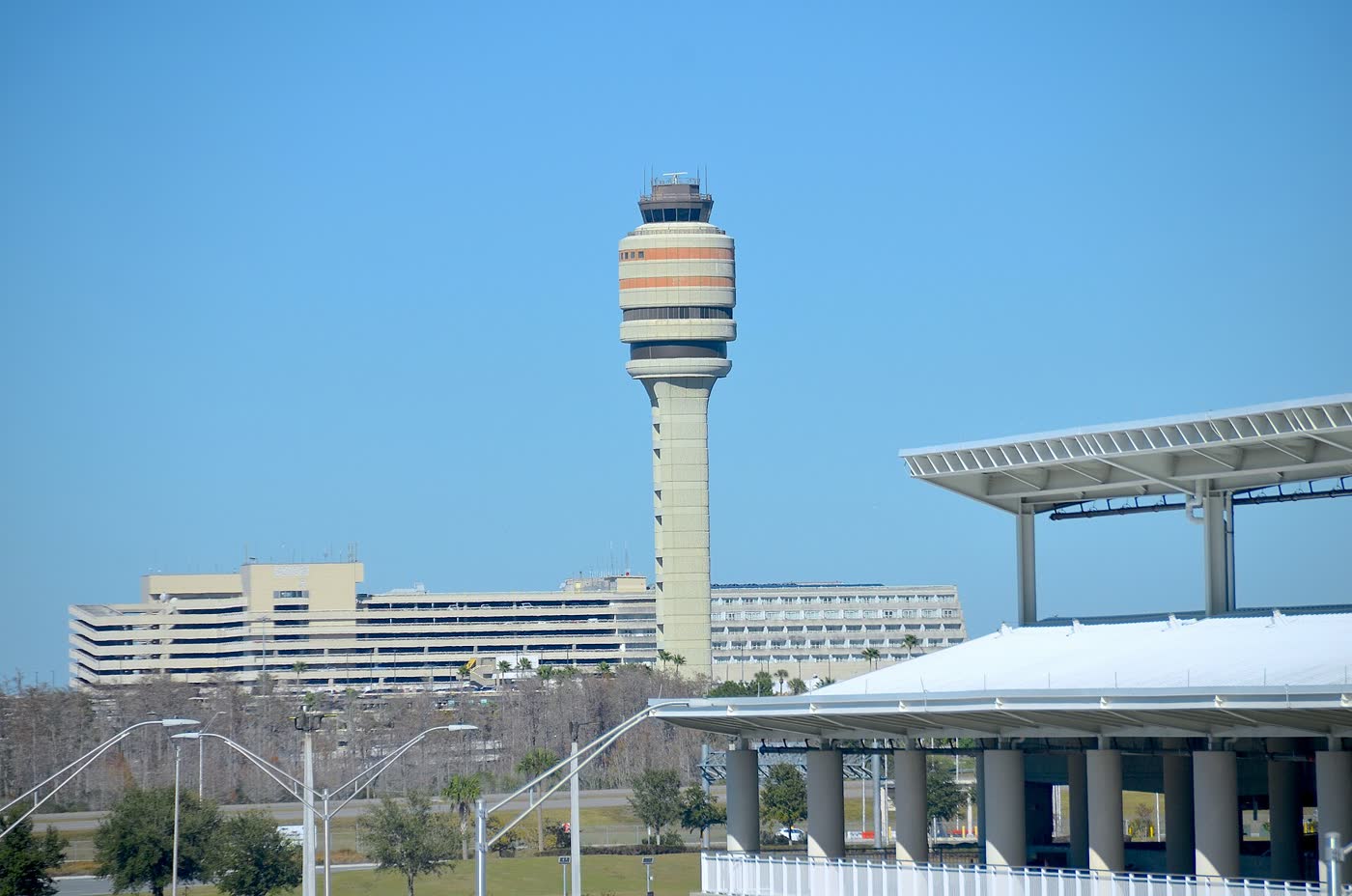
On Friday afternoon the FAA ordered a ground stop on all departing flights, citing “extraordinary circumstances and for reasons of safety”. According to the Transport Secretary, about 3,500 aircraft were in the air when the order came.
The stop was lifted at 8:15 p.m. Eastern. Before clearing flights, the FAA said it had tested its systems to confirm they were stable. By Friday evening FlightAware listed more than 10,000 delays and over 4,000 cancellations, and AP counted about 1.5 million affected passengers.
How rare this is
This was the first nationwide ground stop since January 2023. Before that, the last one followed the attacks of 11 September 2001.
What officials say caused it
Nobody has confirmed a root cause. Five accounts are on the table, and they are not strictly contradictory.
- FAA statementA “temporary telecommunications outage” at its air route traffic control centres.
- Transport SecretaryOld routers and switches were overloaded with data in a system he called “incredibly old”.
- Homeland SecurityNew security patches added to the older system appeared to overwhelm its routers. The statement was hedged.
- Reported by CBSUnnamed sources say an update to the private network linking the control system caused a reboot, a crash and a communications outage.
- Reported by BloombergInvestigators are checking whether a software update was responsible.
What has been ruled out
So far, officials see no cyberattack, and the FBI reportedly does not believe the failure was criminal. Both the Homeland Security Secretary and Microsoft say there is no link to the Microsoft 365 outage a day earlier. The vendor of the FAA’s new AI traffic system says its software was not responsible, though the Secretary added that nothing can be ruled out yet.
Old infrastructure meeting new code is not an aviation problem alone. The same pattern sits behind many outages in software that has grown for years, and the cure is the same: staged rollouts, tested rollbacks and a map of what depends on what.
AI
New models arrive cheaper and more specialised, one lab cuts a team, and agents get a human in the loop.
Anthropic cuts Fable prices by 20% with the 5.2 release
Claude Fable 5.2 and Mythos 5.2 arrived on Monday, just before the company’s expected IPO roadshow.
Fable 5.2 now costs $8 per million input tokens and $40 per million output tokens. Fable 5.1 cost $10 and $50. Anthropic says output is up to 30% faster than on the 5.1 models, and a fast mode runs up to 2.5 times quicker at twice the standard price.
On the FrontierCode benchmark Fable 5.2 scored 49.1%, against 42.8% for the best GPT-6 Astra result. Anthropic still points most users to Opus 5.5 for everyday coding and knowledge work. It keeps Fable for the hardest engineering, maths and science problems. Mythos 5.2 is the same underlying model, available only to vetted organisations.
The release comes as the company prepares to list on Nasdaq under the ticker ANT. CNBC reports a valuation target of $1 trillion to $1.5 trillion, down from $2 trillion.
Google opens Gemini 4 Carbon to developers and consumers
Its most capable model so far reaches paying developers, enterprises and Google AI Ultra subscribers.
Google published on 10 November that Gemini 4 Carbon is available through the API in Google AI Studio and Gemini for business, and to Google AI Ultra subscribers in the Gemini app and in AI Mode in Search. About two weeks earlier it had reached cyber defenders through the Fairwind Program.
The introductory price is $2 per million input tokens and $10 per million output tokens until 30 November. After that it becomes $4 and $20. Google positions Carbon for the hardest tasks and says Gemini 4 Argon stays the better choice for most software engineering and knowledge work. The benchmark claims are Google’s own.
The price doubles on 30 November. If you budget an agent that runs on Carbon, plan for the higher rate now.
Meta releases Muse Ember, a small model for repetitive agent work
It is Meta’s smallest and most efficient model, built for the steps an agent repeats all day.
Meta describes Muse Ember as suited to tool calls, coding subtasks, routing, extraction and long-document parsing. It is available through the Meta Model API and Muse Code. It has a one-million-token context window and costs $0.10 per million input tokens and $0.50 per million output tokens for prompts up to 200,000 tokens.
Meta claims it matches Claude Haiku 5.5’s best benchmark score at about a third of the cost. Those benchmarks are Meta’s own and have not been independently verified.
Almost the whole Grok Imagine team was let go
SpaceX’s AI group is reported to have cut about 60 people who built its image and video generator.
The Information reported on 13 November that roughly 60 people working on Grok Imagine have been laid off, leaving only a small crew to maintain the product. Grok Imagine is the image and video generator of xAI, which SpaceX acquired in February.
The product stays available to users, but its long-term future is uncertain. Coverage links the cuts to a shift toward AI coding tools and the Grok Bot agent, to the high compute cost of video generation, and to independent benchmarks in which Grok Imagine trailed rival models. The retreat may also cement the lead of ByteDance, Kuaishou and MiniMax in generative video.
The move sits oddly with Elon Musk’s own words. In March he said the next Grok Imagine release would be “epic” and that the company was “doubling down” on the category. Neither SpaceX nor xAI has confirmed the layoffs, and the report rests on The Information.
Video generation is expensive to run, and the revenue is in coding tools and agents. If your product depends on a vendor’s side feature, check how committed the vendor is to it, and keep a way to switch providers without rewriting your app.
Red Hat ships OpenShift 5 with an agent that troubleshoots clusters
The agent investigates a problem and proposes a fix. An administrator decides whether to apply it.
Red Hat announced general availability of OpenShift 5 on 9 November at KubeCon North America. In the generally available version, its Lightspeed assistant takes a symptom described in plain language, investigates a probable cause and proposes a fix. An administrator evaluates and applies the fix.
Autonomous troubleshooting, where alerts start an investigation by themselves, is a Technology Preview, and operators approve changes before they reach the cluster. Update risk analysis is generally available, while agentic updates are also a Technology Preview.
OpenShift 5 builds on Kubernetes 1.36. Moving from OpenShift 4.22 is an in-place update, not a migration, and the AI features are optional.
The design keeps a person between the agent and the cluster. Agents act with real permissions, so they need a narrow scope, a way to stop them and a clear record of what they did.
Companies
A CEO leaves the world’s most valuable chip maker, Google splits its chips again and Apple closes a forum.
Jensen Huang resigns as Nvidia CEO
The board announced it on Thursday. CFO Colette Kress is interim CEO.
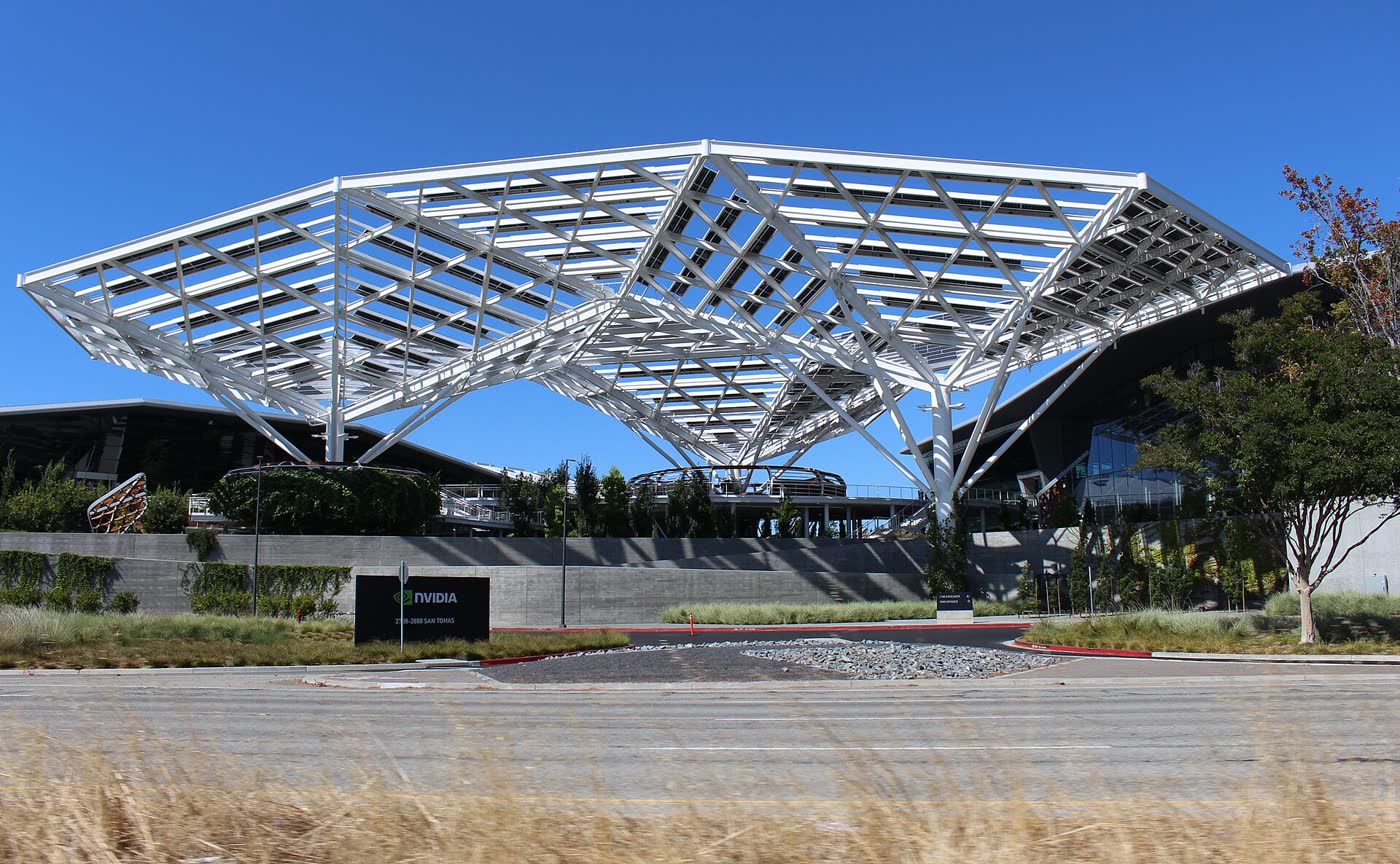
Nvidia announced on 12 November that Jensen Huang has resigned as president, chief executive officer and member of the board, effective immediately. CFO Colette Kress is interim CEO and stays CFO until a permanent successor is named. Harvey C. Jones becomes the company’s first-ever board chair, and the board has started a search for a permanent CEO.
Nvidia’s announcement gives no reason. Two days earlier its independent directors said they had hired outside counsel for an investigation. Press reports link it to Huang’s personal relationship with a woman alleged to have ties to Chinese intelligence. Those details come from the press, not from Nvidia.
Nvidia will still report third-quarter results on Tuesday 17 November. Its shares closed down about 4% on the day of the announcement.
Nvidia sets the pace and the price of AI hardware. Leadership uncertainty at that point in the supply chain reaches every team that plans model training, inference costs or GPU capacity. Watch the 17 November report for guidance rather than for the quarter itself.
Google adds TPU 8i Max and TPU 8tx to its eighth-generation chips
One chip doubles inference capacity, and the other keeps data protected while it is in use.
Google announced two more TPU systems on 9 November. TPU 8i Max puts two TPU 8i chips on one package. Google says it delivers double the compute, double the on-chip SRAM and double the HBM memory bandwidth of a single TPU 8i. It targets very long context windows and the highest compute density per rack.
TPU 8tx is a confidential-computing system for secure inference and small-scale training, aimed at regulated enterprises and governments. It uses the same silicon as TPU 8t, paired with 5th Generation AMD EPYC host processors. Google says hardware protection keeps data and model weights isolated while they are in use, with a near-zero performance penalty.
All performance claims come from Google. The announcement gives no availability date or pricing.
Apple shuts down its Support Community forums on 20 November
The forums are already read-only, and nobody has said what happens to the archive.
Apple announced that the Apple Support Community will permanently close on Friday, 20 November. Since 10 November the forums accept no new posts. Apple told MacRumors it decided to end the forum after a careful evaluation of strategy and customer needs, and it points users to Apple Support.
Neither Apple’s notice nor the coverage says what happens to the archive. If it goes offline, links to it from documentation, blogs and search results will break. If your own docs point to these threads, save copies now.
Security
Two actively exploited flaws, a vendor breach, leaking AI tooling and a day-long cloud outage.
An Outlook flaw is being used in real attacks
CISA put an Outlook spoofing flaw on its list of exploited vulnerabilities and set a deadline of 24 November.
A crafted message file, once a user opens it, makes Outlook connect to a network location the attacker controls, without the usual external-content warning. That exposes the user’s NTLMv2 hash, which an attacker can use to impersonate them. The attack is not zero-click: the victim must open the file, and the Preview Pane is not an attack vector.
The flaw has a CVSS score of 6.5, and Microsoft rates it Moderate. It affects Microsoft 365 Apps for Enterprise, Office LTSC 2021 and Office LTSC 2024. CISA added it to its Known Exploited Vulnerabilities catalogue on 10 November. Federal agencies must fix it by 24 November, and any organisation that runs Outlook should not wait for that date.
It arrived in a heavy Patch Tuesday. Microsoft’s November release fixed 1,093 vulnerabilities, 63 of them critical. The Outlook flaw is the one reported as actively exploited.
- Install the November Microsoft updates, starting with Outlook and Exchange.
- Check which of your internal tools still depend on old Outlook clients.
Chrome patches its eighth exploited zero-day of 2026
Attackers were already using the bug when Google shipped the fix.
Google’s update of 9 November fixed nine security flaws in Chrome, one of them already used in attacks. CVE-2026-125350 is a use-after-free bug in Chrome’s XML component. A crafted web page could let an attacker run code inside Chrome’s sandbox. The flaw scores 8.8 on the CVSS scale, and the user has to interact with the page. An anonymous researcher reported it on 6 November.
BleepingComputer counts it as the eighth Chrome zero-day exploited this year. CISA added it to its catalogue on 10 November with a federal deadline of 24 November. Update to version 157.0.8103.50 or .51 on Windows and macOS, or .50 on Linux and Android, and restart the browser.
Microsoft 365 went down for hours: Outlook, Teams and Copilot hit
Microsoft says servers became unavailable and strained the rest of its infrastructure. It sees no sign of a cyberattack.
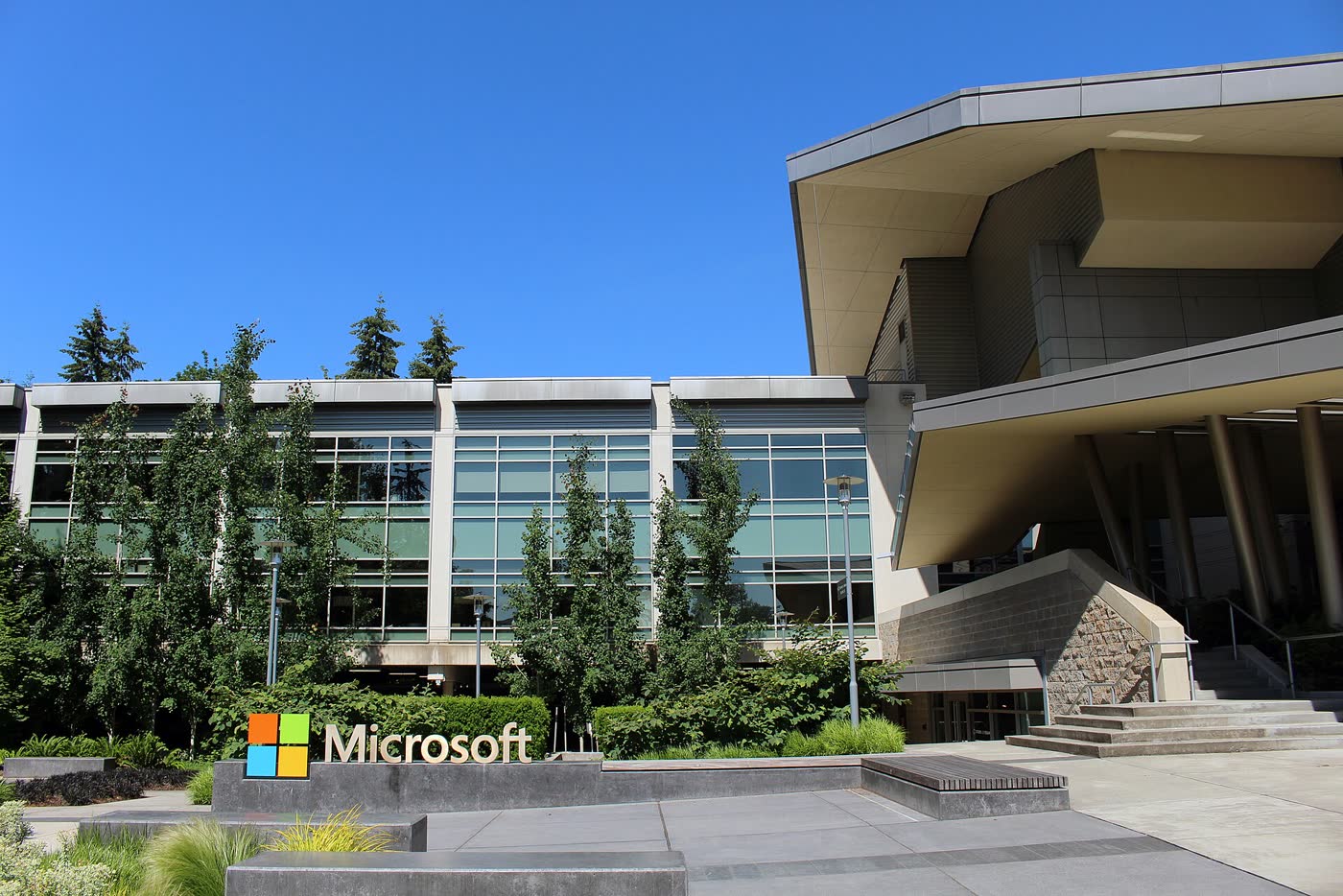
The outage began at 1:26 p.m. Eastern on Thursday 12 November, according to incident MO1550821. Microsoft’s advisory named Exchange Online, Teams, SharePoint Online, Microsoft 365 Copilot and Defender XDR.
Microsoft first blamed elevated infrastructure load. It later said traffic had not grown. Instead, a number of servers became unexpectedly unavailable, which strained the remaining infrastructure, and a core process on the affected servers became overwhelmed. Microsoft was investigating whether reverting recent configuration updates could speed recovery. It found no sign of malicious activity.
Recovery was gradual on 13 November, and Microsoft extended its email timeout window to 48 hours. Full restoration was not confirmed at the last update. The Homeland Security Secretary and Microsoft both say the outage was not connected to the FAA ground stop a day later.
A vendor’s breach exposed Notion AI chats
Notion says an incident at its AI provider Fireworks AI affected fewer than 1% of workspaces.
Notion says the exposed data were AI chat transcripts used for its Insights feature. They held the full text of chat messages and of the AI’s answers, which can include names, emails or API tokens that users typed. For most workspaces, nothing linked a transcript to a user or a workspace.
Notion says it disconnected from Fireworks on 3 November, that Fireworks kept data despite a zero-retention commitment, and that it has disabled Insights. It advises rotating any credentials pasted into AI chats and watching for phishing.
A vendor’s vendor is part of your attack surface. Ask your AI providers where your data goes, who else processes it and whether the retention promise is checked.
Claude Code’s “don’t ask again” option leaks secrets on GitHub
Researchers found passwords and keys in more than a thousand public copies of one settings file.
When a developer picks “Yes, and don’t ask again”, Claude Code saves an allow rule in the file .claude/settings.local.json. For an exact command, the rule stores the full command in plain text, including any password or token typed into it. Claude Code adds the file to the user’s global git excludes on first write, but that protects only that machine, not the project’s own .gitignore.
The security firm Apiiro counted 104,185 copies of the file in 103,617 public repositories. A total of 1,122 copies, about 1.1%, held at least one secret, 1,379 distinct secrets in all. More than a third of them open a database directly, including 379 database passwords. The files also held 43 SSH logins, 42 tokens for GitHub, GitLab or npm, and 23 AWS keys.
Apiiro did not test whether the secrets still work, though one company it notified confirmed that its key was live. The Hacker News reported the findings on 7 November.
- Search your organisation for .claude/settings.local.json and .claude/settings.json, including git history.
- Rotate every secret those files held before you clean them up.
- Remove the file from the repository with git rm --cached and add it to .gitignore.
- Approve command patterns instead of single commands, and keep secrets in a secrets manager.
Search
One update to wait out before you change anything.
If your rankings move, do not touch anything yet
Google’s November core update started rolling out on Tuesday and will run for up to two weeks.
The rollout began on 10 November at 10:06 a.m. Pacific. It applies globally and to all languages. It is the third broad core update of 2026, after March and May, and Google calls it a regular update designed to surface relevant, satisfying content.
The two earlier updates took about twelve days each, so the likely finish is around 24 November. That date falls just before Thanksgiving, Black Friday and Cyber Monday, which will distort e-commerce comparisons.
- Wait until the Search Status Dashboard marks the rollout as complete.
- Wait one more full week, then compare Search Console with the week before 10 November.
- Judge by clicks and impressions per page, not by single keywords.
Changing a site in the middle of a core update makes the result impossible to read. Google’s own advice is to measure first and act afterwards.
Five dates for the calendar
Nvidia quarterly results
The first report after the CEO exit, due at about 1:20 p.m. Pacific. Guidance matters more than the numbers.
Microsoft Ignite
In San Francisco. Expect Copilot and agent announcements, which Microsoft has already started to preview.
Apple Support Community closes
Save any threads you rely on before then.
Google core update should finish
Then wait a week before reading Search Console. The deadline for the Outlook and Chrome flaws falls on the same day.
Gemini 4 Carbon introductory price ends
Input tokens go from $2 to $4 per million, output from $10 to $20.
Old systems plus fresh updates break things
The ground stop, the Microsoft 365 outage and the Outlook flaw share one pattern: ageing infrastructure meeting new code. For teams that ship products, three habits cut the risk. Roll updates out in stages with a tested way back, give every autonomous agent a narrow set of permissions and a way to stop it, and map your vendors’ vendors before an incident does it for you.
Planning a release you cannot afford to break? Talk to the engineers who would build it. See our case studies or tell us about your project, and we reply with questions, an approach and an estimate.
Discuss your projectSources: Al Jazeera · CBS News · NBC News · Nvidia · Google · Meta · BleepingComputer · Search Engine Journal. Figures are as reported on 14 November 2026 and may change.
SEE MORE OUR CASE STUDIES
Contact us
Please fill out the form, and we will get back to you once your request has been processed.
You can also send your request directly to our email: info@24gen.space
We will respond as soon as possible after receiving your message.