

February 2026 AI and Tech News: When AI Finally Became Infrastructure
February 2026 showed that artificial intelligence is no longer just a feature tucked inside products. It has turned into a full infrastructure layer that spans models, chips, data centers, regulations and edge devices. For C‑level executives, product leaders and future founders, the question is not whether to use AI, but how fast the organization can adapt to this new landscape. This February 2026 AI and technology news roundup highlights the main events and explains what they mean for strategy, architecture and new software startups.
1. AI models and agents: the core is changing
Gemini 3.1 Pro raises the bar for reasoning
Google released Gemini 3.1 Pro and pushed reasoning performance to a new level. The model scored around 77% on the demanding ARC‑AGI‑2 benchmark, more than doubling the previous result. It also introduced a three‑level “thinking mode” that lets teams choose between speed and depth of reasoning for each task. As a result, generative AI moves from simple Q&A and content to more complex problem solving that can support analysts, engineers and managers.Frontier and agent platforms: beyond simple chatbots
OpenAI is heavily investing in AI agents for enterprises. Its Frontier service helps companies deploy AI agents on top of their current data and systems, including a major integration with Snowflake worth hundreds of millions of dollars. At the same time, Anthropic and OpenAI are rolling out stronger frontier models focused on coding and agentic workflows. For product teams, this means that the real opportunity in 2026 is not another chatbot UI, but full agentic workflows that can execute multi‑step processes end‑to‑end.EVMbench: when agents attack instead of protect
In February, OpenAI and Paradigm introduced EVMbench, a benchmark that tests how well AI agents can find and exploit vulnerabilities in Ethereum smart contracts. Agents managed to exploit more than 70% of the vulnerable contracts that were tested. This result proves that the same tools used to automate audits and security can also be weaponized. For fintech and DeFi products, AI security is now as important as traditional application security, and it requires continuous monitoring of what autonomous agents can actually do.National AI models: local language, local rules
February 2026 also strengthened the trend of national AI ecosystems. India continued to push its AI for All agenda and support sovereign models tailored to local languages and regulations, while Chinese vendors are preparing major releases tied to the lunar new year cycle. Sovereign models help with compliance, culture and local needs, but they also require local chip supply, local data centers and local policy support. For startups, this opens clear niches in vertical AI, local compliance tooling and region‑specific agent platforms.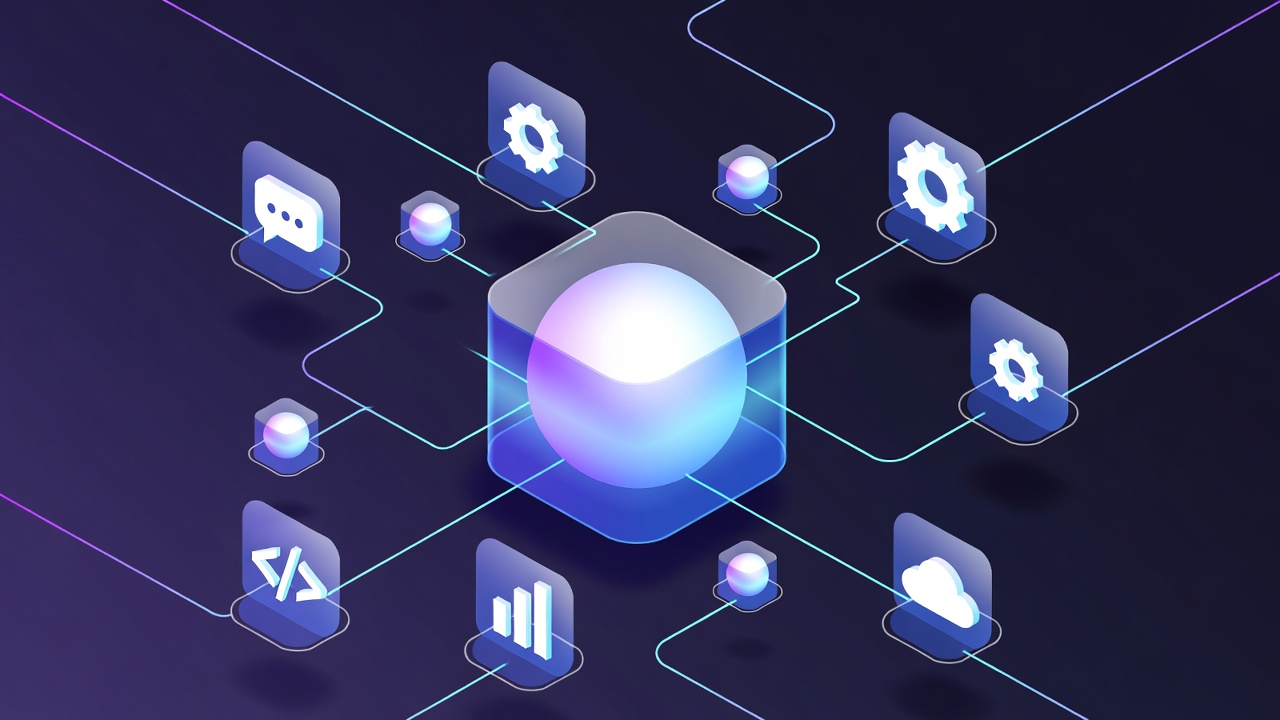
2. Chips and data centers: where AI actually runs
Meta, Google TPU and AMD: multi‑vendor AI infrastructure
One of the key February 2026 technology stories was Meta’s move toward a multi‑vendor AI stack. Meta rents powerful TPU chips from Google to train and serve its new models, while also signing a huge deal with AMD for AI GPUs that could reach up to 6 GW of compute capacity. Together with a deeper partnership with Nutanix, this creates a heterogeneous infrastructure built from GPUs, TPUs, custom accelerators and software platforms. For CTOs and architects, the message is clear: relying on a single hardware vendor is becoming a strategic risk, especially at scale.Nvidia’s dominance and export limits
Nvidia continues to dominate the AI chip market and briefly reached an eye‑catching valuation in the multi‑trillion dollar range, driven by record data center revenue. At the same time, the company is working under tighter export controls, receiving only limited licenses to ship its high‑end H‑series accelerators to China. For enterprises and cloud providers, this combination of dominance and regulation increases the need for capacity planning, cost optimization and alternative options such as AMD, custom ASICs and smarter model deployment.ASML and High‑NA EUV: removing a key bottleneck
ASML announced that its High‑NA EUV machines are ready for volume production and have already processed roughly 500,000 wafers. These systems enable smaller process nodes and higher transistor density, which translate directly into more efficient and powerful chips for AI workloads. In simple terms, this is the deep manufacturing layer that will make the next generation of AI accelerators possible over the coming years.AI chip startups: MatX, Axelera, SambaNova
Several AI chip startups raised large rounds in February. MatX secured around 500 million dollars for LLM‑focused chips, Axelera raised 250 million dollars for RISC‑V edge accelerators, and SambaNova attracted more funding while announcing partnerships with Intel and SoftBank data centers. These deals support a shift from “one generic GPU SKU” to specialized silicon optimized for specific model classes and deployment patterns. For both enterprises and startups, this could mean better cost‑performance profiles and more options for running AI workloads outside of the usual GPU stacks.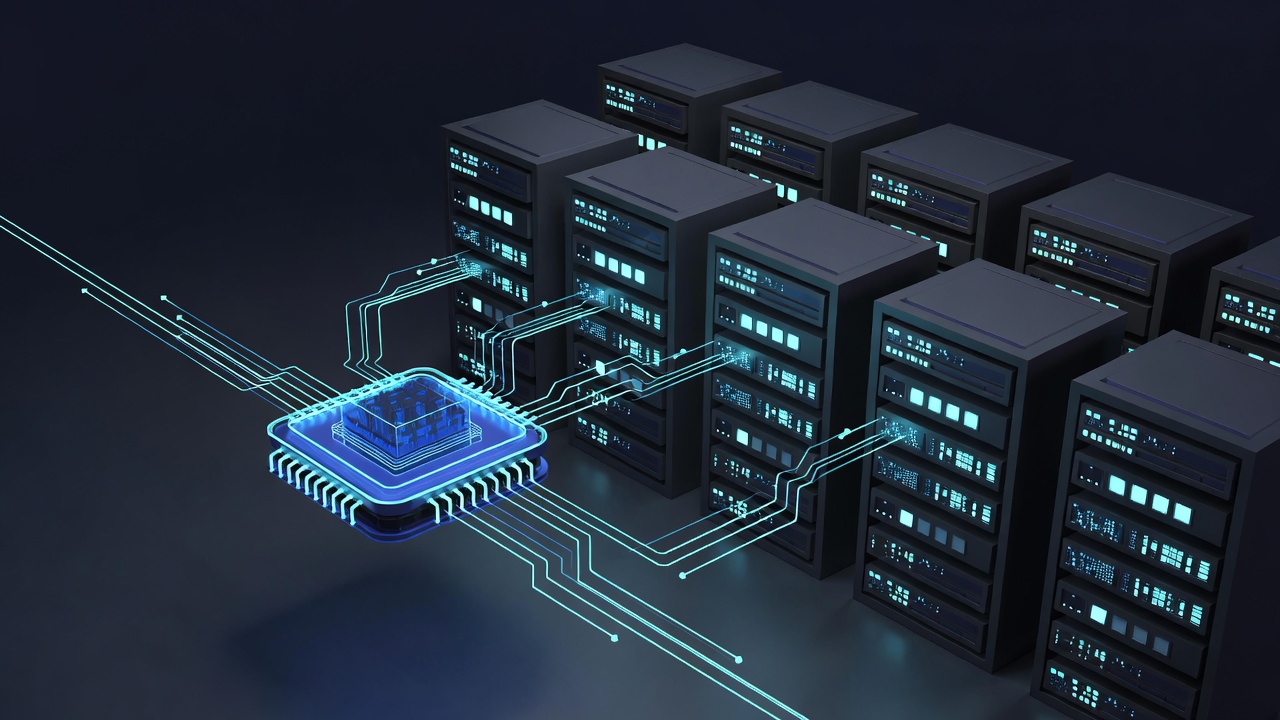
3. Edge AI and consumer devices: intelligence at the edge
Galaxy S26: the smartphone as an AI node
Samsung officially unveiled the Galaxy S26 line with a strong focus on on‑device AI. The phones come with deep Gemini integration, “easy AI” scenarios and new privacy and low‑power modes that allow more inference to run locally. This shifts the smartphone from a thin client of cloud AI into a full AI node capable of handling part of the workload itself. For product managers, this opens new possibilities around low‑latency experiences, offline features and more transparent handling of sensitive user data.Wearables and neuromorphic chips
Monthly AI and technology news digests also highlighted growing interest in neuromorphic chips and AI‑enabled wearables. These devices can process continuous sensor data directly on the device, which is particularly useful in healthcare, sports and industrial monitoring. Processing data at the edge reduces latency and dependence on constant connectivity, while also reducing cloud costs. For founders, this makes edge AI a realistic entry point for B2B and B2C products rather than a distant research topic.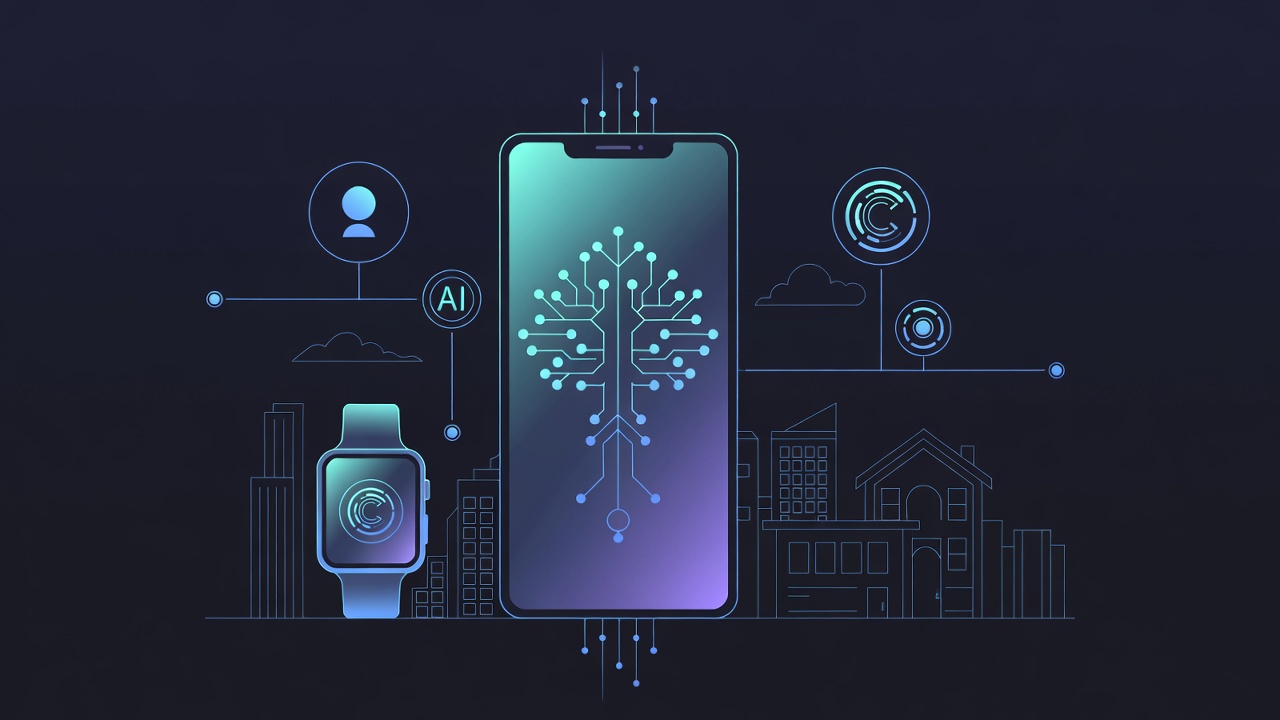
4. Policy and regulation: AI as national infrastructure
India AI Impact Summit: “AI for All” and gigawatt‑scale data centers
At the India AI Impact Summit 2026, India reaffirmed its “AI for All” framework and long‑term plans for AI investment and infrastructure. OpenAI announced an “OpenAI for India” program together with Tata Group, including an agreement for 100 MW of AI‑ready data center capacity with plans to scale to 1 GW. This positions AI data centers as a new kind of strategic infrastructure, similar to energy, roads or telecom networks.Export controls, AI risk and governance
At the same time, governments and regulators continue to discuss export controls on advanced chips and rules for high‑risk AI systems. Debates cover model transparency, accountability, safety benchmarks for agents and limits on AI use in sensitive domains such as finance, health and bio‑research. For companies, this means AI governance, documentation and risk management need to be built into roadmaps from the start, not added at the end of a project.
5. Takeaways for IT leaders, PMs and startup founders
What C‑level executives should notice
The February 2026 AI and technology news shows that AI infrastructure is becoming its own class of capital expenditure. Leaders need to decide where their organization will sit on the spectrum from “consume managed AI services” to “build and control a significant AI stack and compute footprint”. It is also time to treat AI governance, security and regulatory risk as first‑class parts of corporate strategy instead of side projects.Where startup founders can find opportunities
For startup founders, February 2026 highlights several clear areas:- Infrastructure and tooling for multi‑model, multi‑cloud AI orchestration.
- Security, monitoring and compliance around agentic AI, especially in finance and web3.
- Vertical, domain‑specific and region‑specific AI models on top of sovereign or global foundations.
- Edge AI products built around the new generation of smartphones, wearables and industrial sensors.
Conclusion: February 2026 is a signal, not a spike
February 2026 AI and technology news is more than a collection of impressive announcements. It is a clear signal that AI is turning into shared infrastructure that will shape how software is built, deployed and regulated for years to come.
For IT leaders, the question now is how to align architecture, budgets and talent with this shift, instead of treating AI as a side experiment. For product managers and startup founders, the month highlights a simple truth: the most interesting opportunities appear at the intersection of models, hardware, data centers and real‑world workflows.
Contact us
Please fill out the form, and we will get back to you once your request has been processed.
You can also send your request directly to our email: info@24gen.space
We will respond as soon as possible after receiving your message.